Cold War spies and the cases that shaped MI5
Atom spies, the Cambridge Five, a jailbreak from Wormwood Scrubs and the day Britain expelled 105 Soviet officers. The story of Britain’s secret war, told from the former country home of MI5’s second-in-command.
A spy story with a house in Surrey at the end of it
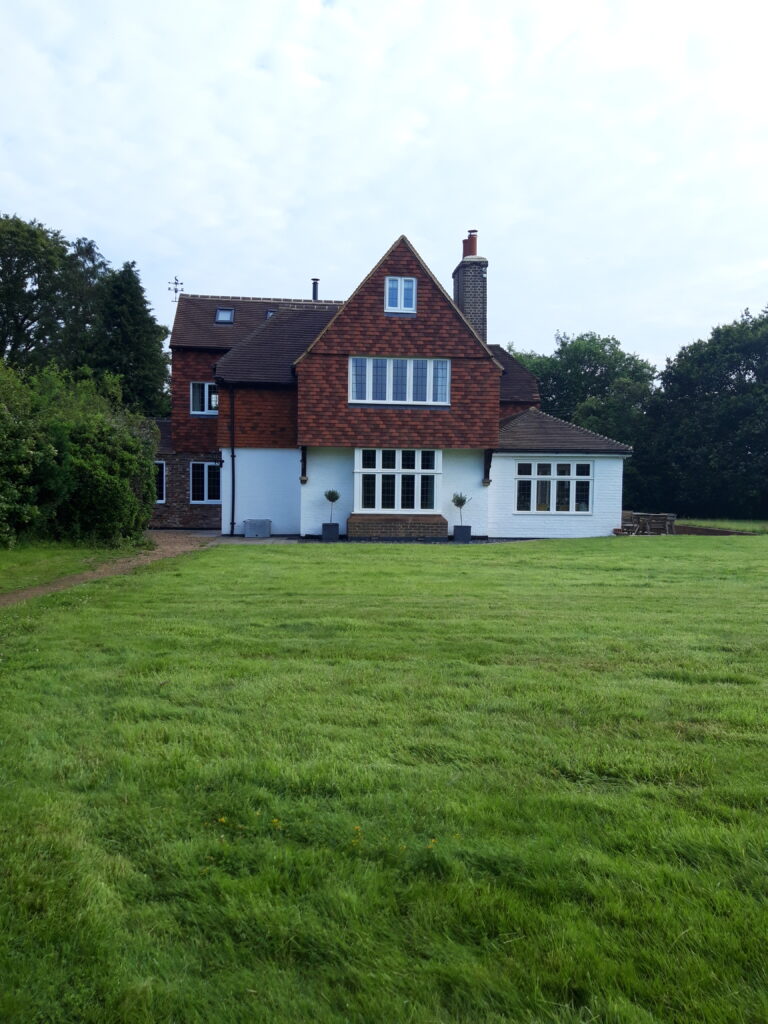
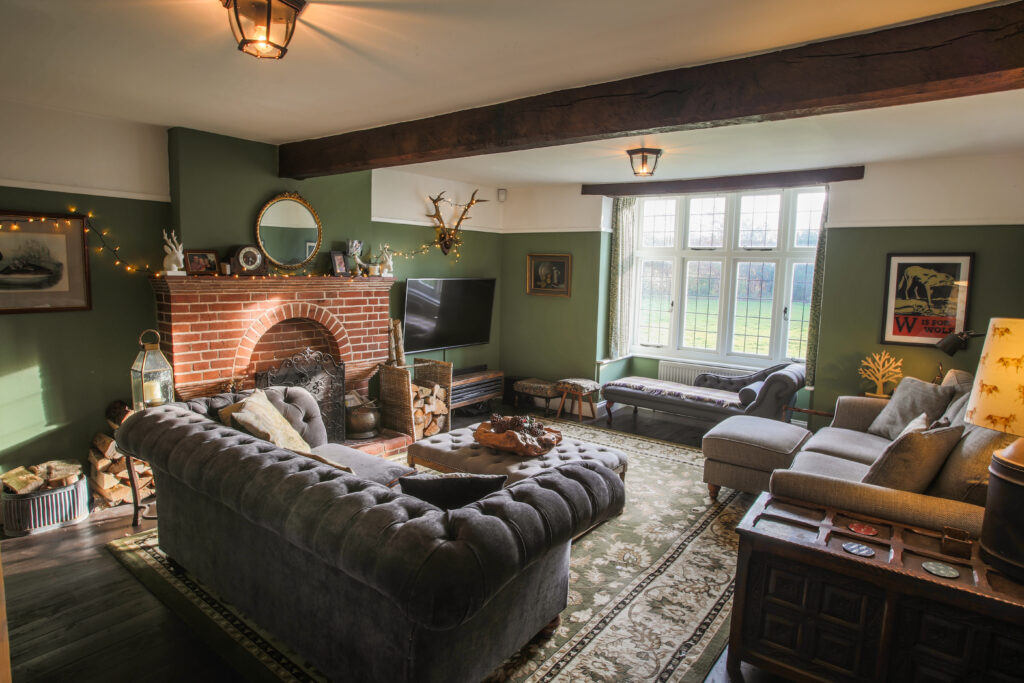
Our home just outside Guildford is known as The Spy’s House because, for many years, it belonged to Anthony Simkins, who rose to become Deputy Director-General of MI5, the service’s second most senior officer, from December 1965 to 1971. When he retired here, he spent years writing MI5’s secret history of the Second World War.
Guests often ask us about that world: who the famous British spies were, what MI5 was actually up against, and why the Cold War spy scandals still fascinate us. So we’ve put together this guide. It’s a short history of Britain’s Cold War espionage cases, from the first atom spies to the defectors of the 1980s, with the places you can visit and the books to read by the fire.
A note on sources: much of this history is still argued over, and new files continue to be released. We’ve stuck to the well-established facts, and we’ve been careful not to claim more about our own house than the record shows. You can read the full story of Anthony Simkins and the house on our history page.
MI5, MI6 and the Cold War
Britain’s intelligence world has three main agencies. MI5, the Security Service, works at home: catching foreign spies, protecting secrets and, later, countering terrorism. MI6, the Secret Intelligence Service, gathers intelligence abroad. GCHQ intercepts and breaks communications, the successor to the codebreakers of Bletchley Park.
After 1945 the threat changed overnight. The Soviet Union, an ally during the war, became the main adversary, and it turned out that Soviet intelligence had recruited sources deep inside the British establishment in the 1930s and 1940s. Much of MI5’s Cold War was spent discovering just how deep that penetration went, and dealing with the fallout from the answers.
The work was mostly unglamorous: surveillance, vetting, files and patience. But it produced some of the most extraordinary stories of the 20th century.
Britain’s Cold War spy cases, 1946 to 1999
The cases that defined the era, in order.
| 1946 | The first atom spy The British physicist Alan Nunn May is jailed for ten years for passing atomic research to the Soviet Union, the first sign that Moscow had targeted the Allied bomb programme. |
|---|---|
| 1950 | Klaus Fuchs The German-born physicist, who had worked on the atomic bomb and at Harwell, confesses to passing nuclear secrets to the Soviets and is sentenced to 14 years. |
| 1951 | Burgess and Maclean vanish Two Foreign Office diplomats, Guy Burgess and Donald Maclean, flee to Moscow just as Maclean is about to be questioned. The hunt for the “third man” begins. |
| 1961 | George Blake and the Portland Spy Ring MI6 officer George Blake is sentenced to 42 years for betraying agents to the KGB. The same year MI5 rolls up the Portland Spy Ring, which had stolen naval secrets, arresting “Gordon Lonsdale” and his British sources. |
| 1962 | John Vassall An Admiralty clerk, blackmailed by the KGB while posted to Moscow, is convicted of spying and sentenced to 18 years. |
| 1963 | Philby defects and Profumo resigns Kim Philby, the “third man”, slips out of Beirut to Moscow. At home, the Profumo affair, with its links to a Soviet naval attaché, shakes the government. |
| 1964 | Blunt confesses Sir Anthony Blunt, Surveyor of the Queen’s Pictures, privately confesses to having spied for the Soviets in exchange for immunity. The public will not find out for fifteen years. |
| 1966 | Blake escapes George Blake escapes from Wormwood Scrubs and makes his way to Moscow, a huge embarrassment for the British authorities, less than a year into Anthony Simkins’s time as Deputy Director-General. |
| 1971 | Operation FOOT After the defection of KGB officer Oleg Lyalin, Britain expels 105 Soviet intelligence officers. MI5 describes it as the major turning point in Cold War counter-espionage in Britain. It came in the year Simkins retired. |
| 1979 | Blunt exposed Margaret Thatcher confirms in the Commons that Blunt was a Soviet spy, and he is stripped of his knighthood. |
| 1983 to 1985 | Bettaney and Gordievsky MI5 officer Michael Bettaney tries to offer secrets to the KGB, and intelligence from Oleg Gordievsky, a KGB officer secretly working for Britain, helps catch him. In 1985 Gordievsky, under suspicion in Moscow, is smuggled out of the Soviet Union by MI6. |
| 1987 | Spycatcher Former MI5 officer Peter Wright’s memoir, with its claims about the 1960s mole hunts, is published abroad despite the government’s efforts to stop it. |
| 1990s | The last revelations John Cairncross is publicly named as the fifth member of the Cambridge ring, and in 1999 the Mitrokhin archive exposes Melita Norwood, a great-grandmother from Bexleyheath who had passed atomic secrets for decades. |
The names everyone knows
The Cambridge Five
Kim Philby, Guy Burgess, Donald Maclean, Anthony Blunt and John Cairncross, recruited by Soviet intelligence while at Cambridge in the 1930s. Between them they reached the Foreign Office, MI6, MI5 and the codebreakers. Philby, who rose high in MI6, is often called the most damaging spy in British history.
George Blake
An MI6 officer turned by the Soviets after his capture in the Korean War. His betrayal is thought to have cost the lives of agents working for the West. His 42-year sentence was one of the longest ever handed down in a British court, and his escape in 1966 made headlines around the world.
Klaus Fuchs
The scientist whose information is widely believed to have helped the Soviet Union build its first atomic bomb sooner than it otherwise would have. His arrest exposed a network of atom spies on both sides of the Atlantic.
The Portland Spy Ring
A Soviet “illegal” posing as a Canadian businessman, Gordon Lonsdale, ran two sources inside the naval research base at Portland, with a couple in a suburban bungalow in Ruislip transmitting the secrets. A classic MI5 surveillance case.
Oleg Gordievsky
The KGB officer who spied for Britain for more than a decade, giving the West an extraordinary view of Soviet thinking in the tense early 1980s. His escape from Moscow in 1985, hidden in the boot of a car, is one of the great spy stories.
Melita Norwood
The least likely spy of all: a secretary at a metals research association who passed atomic secrets to Moscow for decades and was only exposed in 1999, when she was in her late eighties.
MI5 in the late 1960s
Anthony Simkins became Deputy Director-General in December 1965, serving under Sir Martin Furnival Jones. It was a difficult time to be near the top of MI5. The service was still dealing with the aftermath of the Philby and Blunt revelations, internal suspicions about Soviet penetration were running high, and George Blake’s escape in 1966 caused enormous embarrassment.
By the time Simkins retired in 1971, the picture was changing. That year, Operation FOOT removed 105 Soviet intelligence officers from Britain in one stroke, and MI5 itself regards it as the turning point of its Cold War. Simkins retired to Guildford, to the house our guests now stay in, and was commissioned to write MI5’s own history of the Second World War, later working with Sir Harry Hinsley on the official history volume Security and Counter-Intelligence, published in 1990.
Simkins kept out of the public eye for almost all his life. We tell more of his remarkable story, including his escape from an Italian prisoner-of-war camp, on our history page.
Where to explore Britain’s spy history
All within reach of a weekend in Surrey.
Bletchley Park, Buckinghamshire
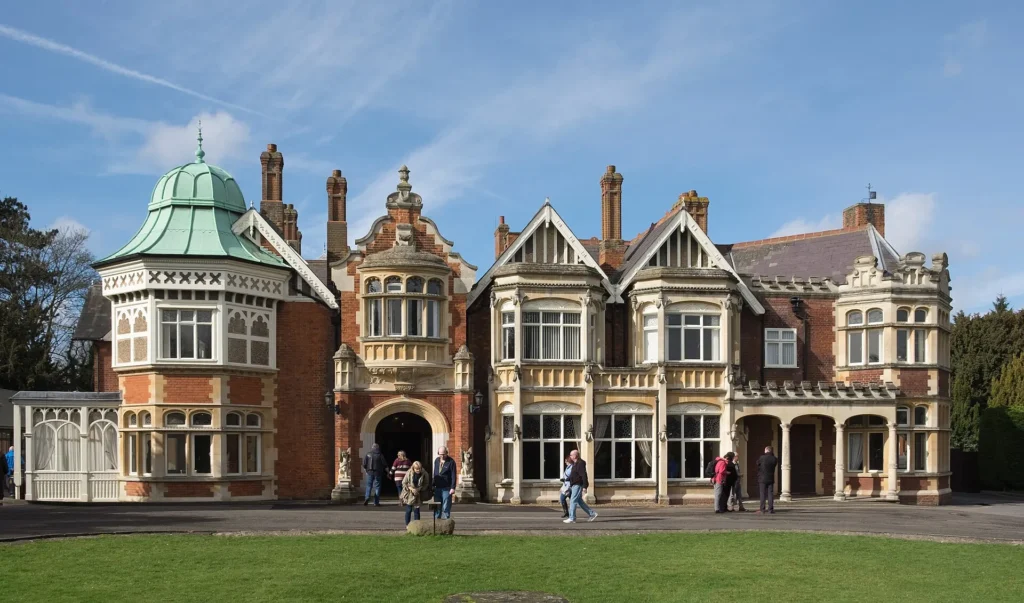
The wartime home of the codebreakers, where Enigma and other Axis ciphers were broken. The mansion, huts and exhibitions make a full day out, and the story leads directly to GCHQ and the Cold War. Allow around two hours’ drive from Guildford.
The National Archives, Kew
Many of MI5’s historical files, including papers on the Cold War cases above, have been released to the National Archives. You can register for a reader’s ticket and see them for yourself, or browse the online catalogue first.
Imperial War Museum London
The museum’s galleries cover the secret war alongside the battlefields, and it regularly hosts exhibitions on espionage. Check what’s on before you go.
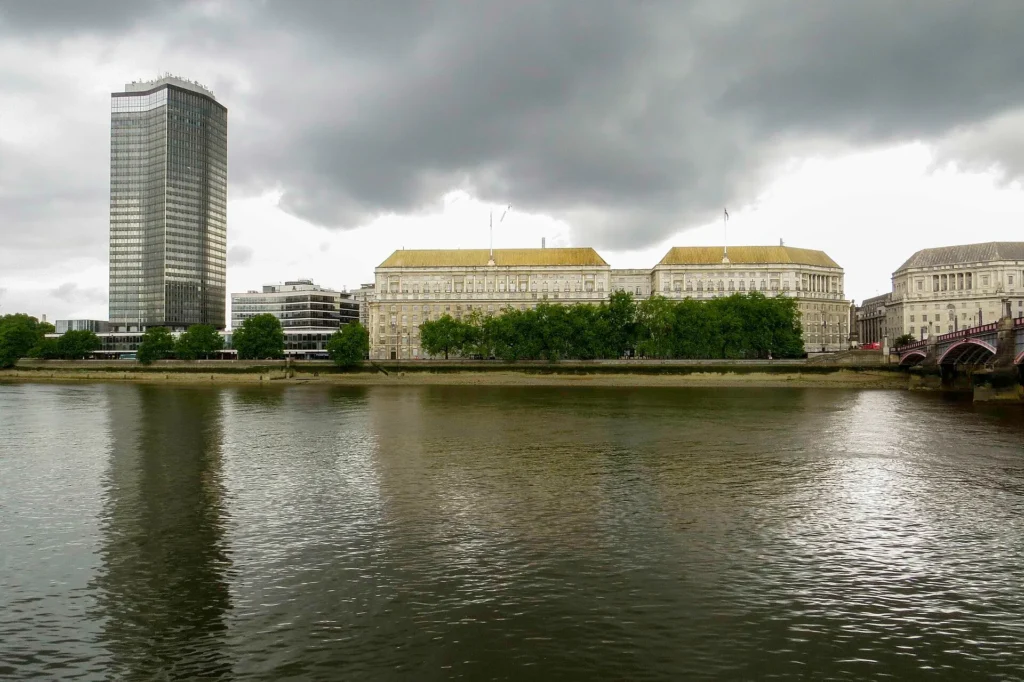
Thames House and Vauxhall Cross
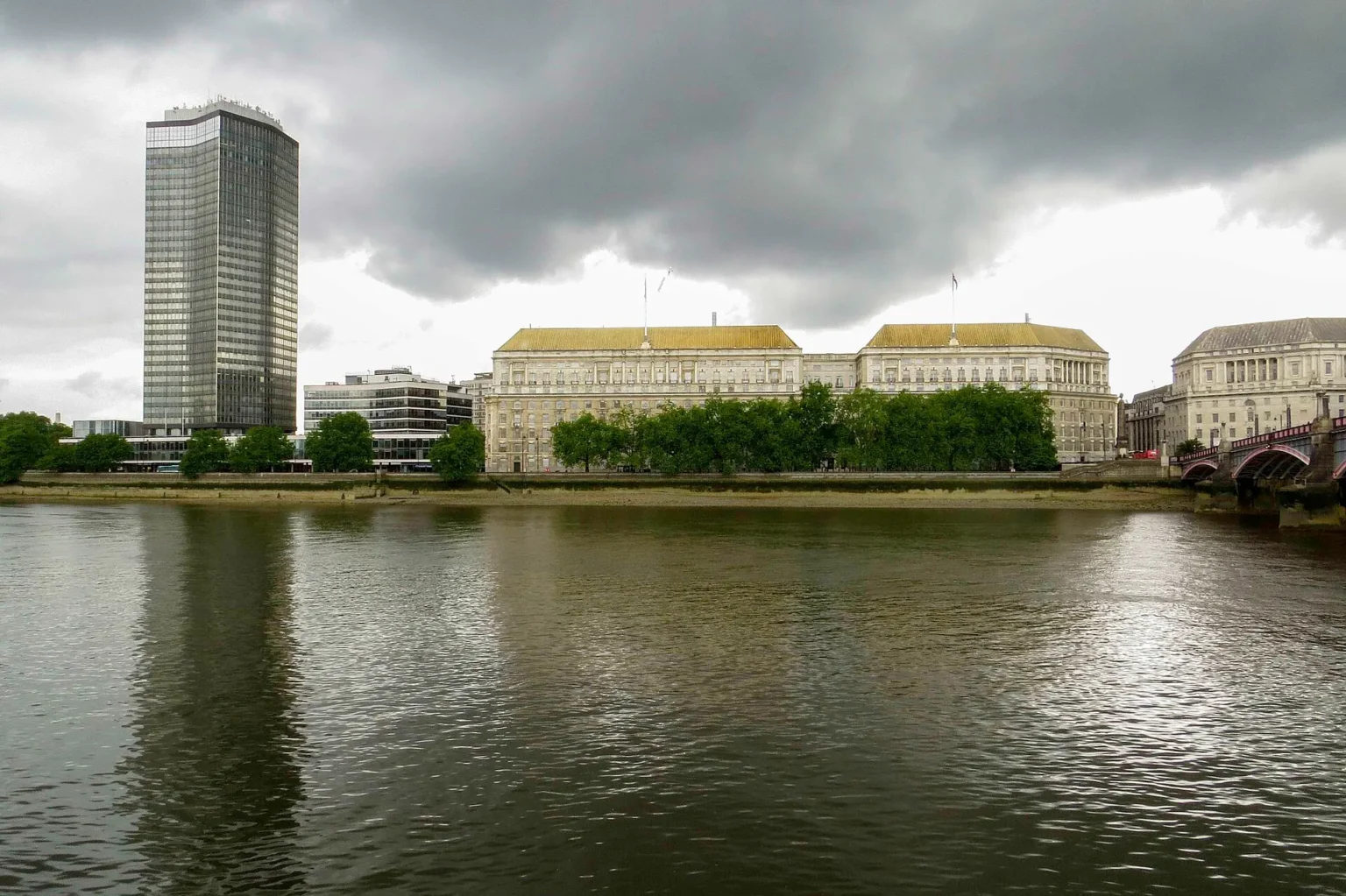
You can’t go inside, but you can see the headquarters of both services from the Thames. MI5’s Thames House stands on Millbank by Lambeth Bridge, and MI6’s building at Vauxhall Cross, familiar from the Bond films, is a short walk upriver.
Cold War spy books and films
Non-fiction
Ben Macintyre’s A Spy Among Friends (Philby) and The Spy and the Traitor (Gordievsky) read like thrillers. Christopher Andrew’s authorised history of MI5, The Defence of the Realm, is the definitive account.
Fiction
John le Carré, himself a former MI5 and MI6 officer, drew on the Philby affair for Tinker Tailor Soldier Spy. Start there, then read The Spy Who Came in from the Cold.
Film night
The 2011 film of Tinker Tailor Soldier Spy is the perfect wet-evening watch, and the 1979 BBC series with Alec Guinness is even better if you have the time.
Throw a Cold War weekend at The Spy’s House
Groups love leaning into the house’s history. A few ideas from guests who’ve done it well:
- A spy-themed murder mystery on Saturday night, with a Cold War dress code: trench coats, pearls, sunglasses indoors.
- Martinis, shaken or stirred, before dinner. A mobile bartender can run a cocktail class in the kitchen.
- A codebreaking treasure hunt round the three acres for the children (or the adults).
- A le Carré film night by the fire, and a day trip to Bletchley Park.
It works for birthdays, hens, family reunions and team weekends alike. See our birthday weekends and hen do ideas.
Cold War spies: FAQs
Who were the Cambridge Five?
Kim Philby, Guy Burgess, Donald Maclean, Anthony Blunt and John Cairncross: five men recruited by Soviet intelligence while at Cambridge University in the 1930s, who went on to pass secrets from the heart of the British establishment.
Who was the most damaging British spy of the Cold War?
Kim Philby is usually given that title, because he rose so high in MI6 and betrayed so much over so long. George Blake, who betrayed many agents, is often named alongside him.
What was Operation FOOT?
The expulsion of 105 Soviet intelligence officers from Britain in 1971, following the defection of KGB officer Oleg Lyalin. MI5 calls it the major turning point in Cold War counter-espionage in Britain.
What is the difference between MI5 and MI6?
MI5, the Security Service, protects the UK at home, including countering foreign spies. MI6, the Secret Intelligence Service, collects intelligence overseas.
Why is it called The Spy’s House?
The house was for many years the country home of Anthony Simkins, Deputy Director-General of MI5 from 1965 to 1971, who retired here and wrote MI5’s history of the Second World War. Read the full story.
Can you visit MI5’s headquarters?
No, Thames House isn’t open to the public, but you can see it from Millbank and Lambeth Bridge. For spy history you can visit, try Bletchley Park, the Imperial War Museum or the National Archives at Kew.
Sleep where the spymaster slept.
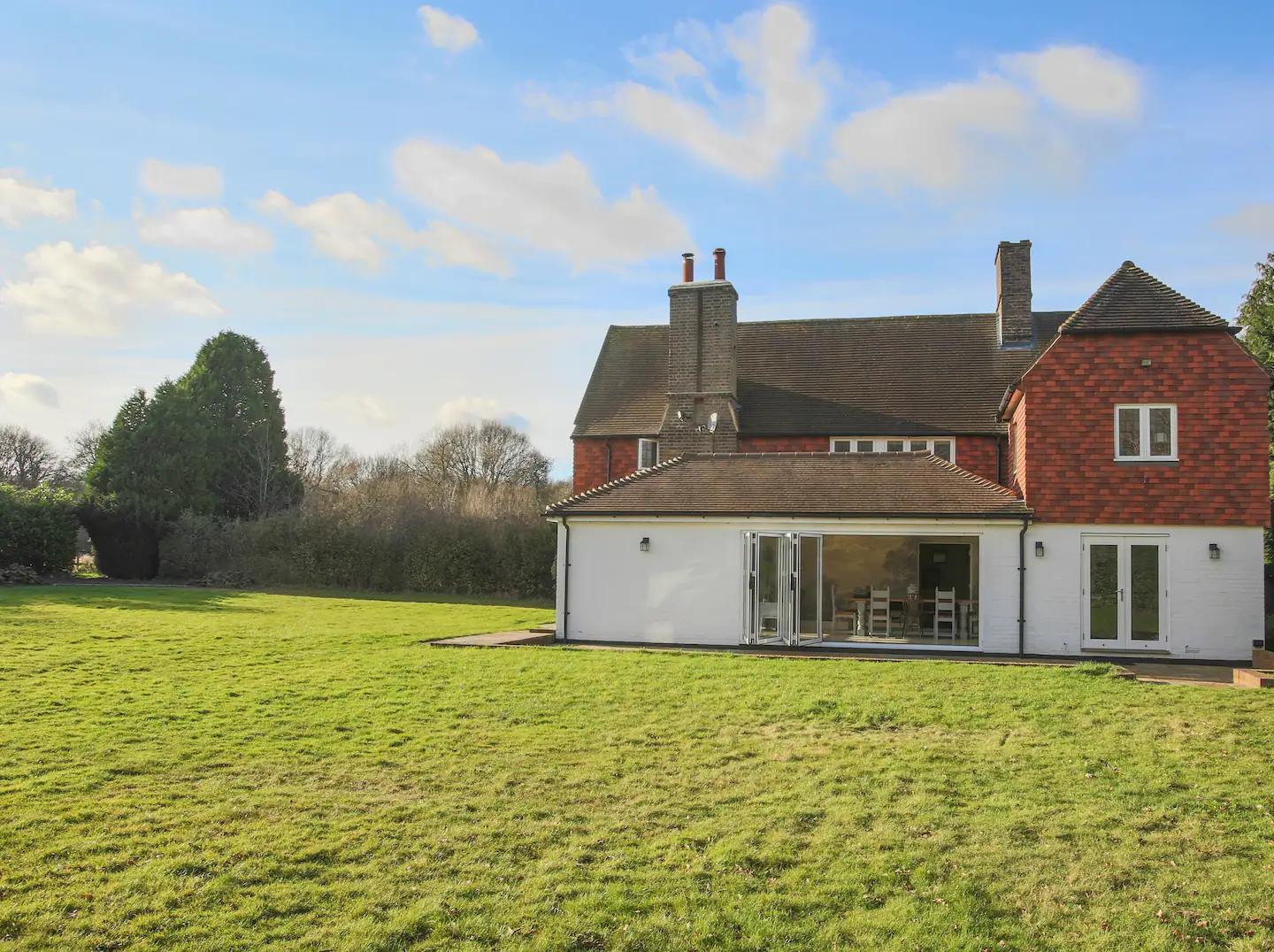
Seven bedrooms for up to 14 guests, a wood-fired hot tub and three private acres, just outside Guildford. Book direct with us.
Keep exploring
Header photo: Steve Daniels / Wikimedia Commons, CC BY-SA 2.0